Basement Macerator Pump vs Sewage Ejector Pump: Explained
When installing a bathroom in a basement or low-level area, choosing the right wastewater system is important. Two common options are basement macerator pumps and sewage ejector pumps. In this guide on Basement Macerator Pump vs Sewage Ejector Pump, you’ll learn how both systems are designed to move waste where gravity drainage is not possible, yet they work in very different ways. Understanding these differences will help you choose the right system for your home or project.
What Is a Basement Macerator Pump?
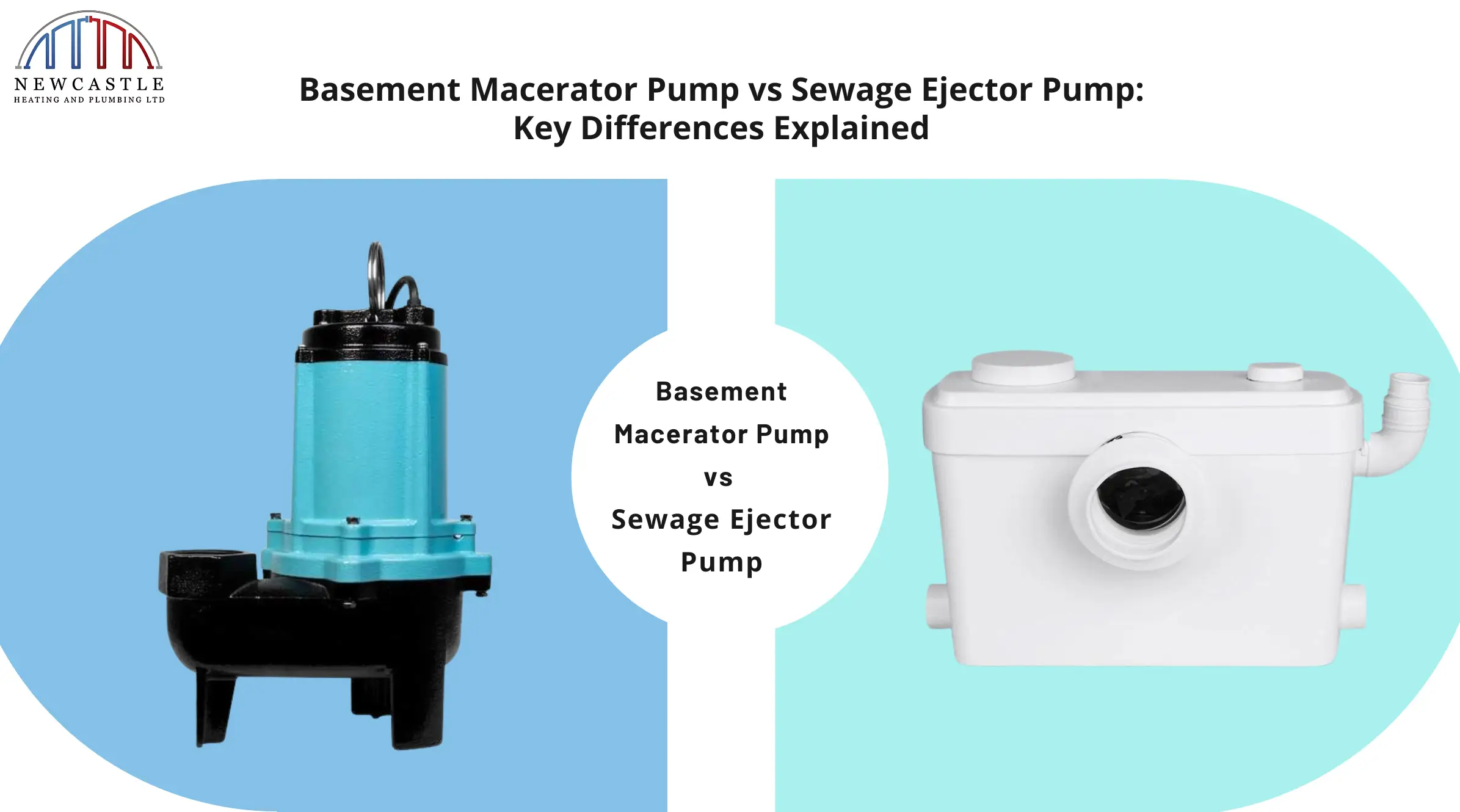
A basement macerator pump is designed to grind solid waste into a fine slurry before pumping it through small pipes to the main drain.
It is usually installed behind a toilet or within a compact unit and is ideal for:
- Basement bathrooms
- Loft conversions
- Small extensions
- Areas with limited pipe space
Because the waste is broken down, it can travel through small-diameter pipes, making installation easier and more flexible.
What Is a Sewage Ejector Pump?
A sewage ejector pump is a more powerful system that moves waste without grinding it.
Instead of macerating, it uses a strong impeller to push solid waste through larger pipes. These pumps are typically installed in a pit or sump basin below floor level.
They are commonly used in:
- Full basement plumbing systems
- Homes with heavy wastewater usage
- Situations where large solids may enter the system
Key Differences Between Macerator Pumps and Sewage Ejector Pumps
1. Operating Principle
Macerator Pump
Breaks down waste using high-speed blades before pumping it out. This makes waste easier to transport through narrow pipes.
Sewage Ejector Pump
Does not grind waste. Instead, it pushes solid waste in its original form using a powerful motor and impeller.
2. Pipe Size Requirements
Macerator Pump
Uses small pipes, typically around 22–32mm (1–1.5 inches). Ideal for tight spaces or retrofit installations.
Sewage Ejector Pump
Requires larger pipes, usually 2–4 inches, to allow solid waste to pass through without blockages.
3. Power Consumption
Macerator Pump
Uses less power because it handles smaller volumes and lighter pumping tasks.
Sewage Ejector Pump
Consumes more power due to its heavy-duty motor and ability to move large volumes of waste.
4. Noise Level
Macerator Pump
Generally quieter. The grinding process happens inside a sealed unit.
Sewage Ejector Pump
Can be louder due to the powerful motor and movement of larger waste materials.
5. Installation Type
Macerator Pump
Installed above floor level, usually behind a toilet. Quick and easier to install without major structural work.
Sewage Ejector Pump
Installed below floor level in a sump pit. Requires more complex installation and often involves digging or structural changes.
6. Maintenance Requirements
Macerator Pump
Requires regular checks on blades and proper usage to avoid blockages. Less pipe blockage risk due to maceration.
Sewage Ejector Pump
Needs more frequent maintenance due to handling solid waste directly. Higher risk of blockages if unsuitable items enter the system.
7. Cost
Macerator Pump
Lower upfront cost and generally cheaper to install. More cost-effective for small projects.
Sewage Ejector Pump
Higher installation cost due to excavation, larger pipes, and stronger components. Better suited for long-term heavy-duty use.
Which Pump Is Better for Your Needs?
Choose a macerator pump if:
- You have limited space
- You need smaller pipes
- You want a quick and cost-effective installation
- You are adding a bathroom without major plumbing work
- You prefer quieter operation
Choose a sewage ejector pump if:
- You need to handle large volumes of waste
- Your system may include larger solid items
- You are installing a full basement plumbing system
- You have space for a sump pit and larger pipes
- You need a heavy-duty solution
When to Call a Professional
You should contact a professional installer or plumber if:
- You are unsure which system is suitable
- You need to install a new basement bathroom
- There are drainage or flow issues
- The pump is noisy, blocked, or not working
- You are dealing with frequent maintenance problems
Both systems involve plumbing and electrical components, so proper installation is essential.
Final Thoughts
Both basement macerator pumps and sewage ejector pumps offer effective solutions for managing wastewater in low-level areas. A macerator pump is ideal for smaller, flexible installations with limited space, while a sewage ejector pump is better suited for larger, heavy-duty systems. Choosing the right option depends on your layout, budget, and the type of waste your system needs to handle.
Frequently Asked Questions
A macerator pump grinds waste before pumping it, while a sewage ejector pump moves waste in its original form. This affects pipe size, installation, and performance.
In some cases, yes, especially for small bathroom setups. However, for heavy-duty systems, an ejector pump is usually more suitable.
Macerator pumps are generally quieter because they operate inside a sealed unit. Ejector pumps can be louder due to their power and size.
Macerator pumps are easier to install because they do not require floor excavation. Sewage ejector pumps need a sump pit and more complex setup.
Yes, macerator pumps are usually cheaper to install. However, the best choice depends on your long-term usage and system needs.