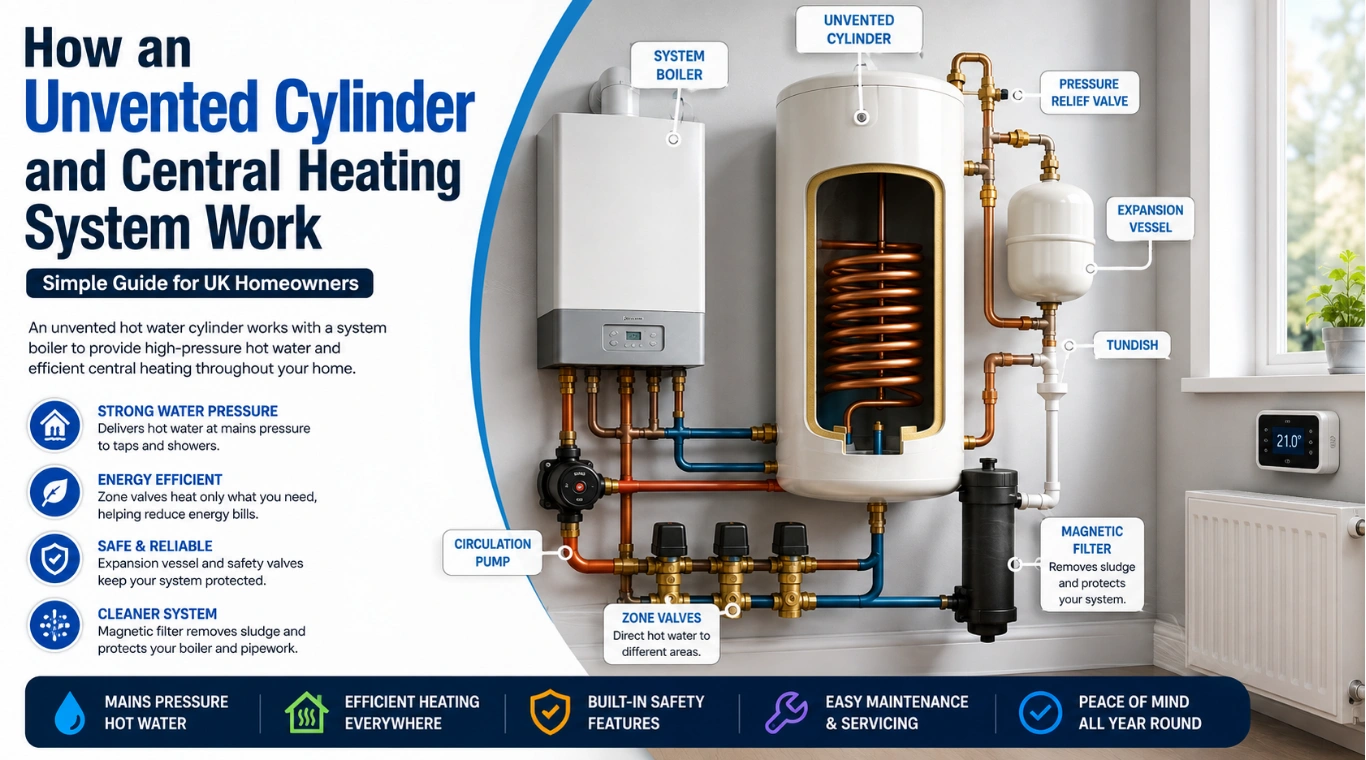
How an Unvented Cylinder and Central Heating System Work
How an Unvented Cylinder and Central Heating System Work | Complete UK Guide (2026)
An unvented hot water cylinder stores hot water directly from your mains water supply, giving you strong water pressure for taps and showers. It works with a system boiler and central heating controls to provide heating and hot water throughout your home.
This guide explains the main parts of the system in simple English.
Quick Answer
A system boiler heats water and sends it through pipes to your radiators or an unvented hot water cylinder. Zone valves control where the hot water goes, while expansion vessels and safety valves keep the system working safely.
How Does an Unvented Cylinder Work?
The process is simple:
- Cold water comes into the cylinder from the mains.
- The system boiler heats water through an internal heating coil.
- The cylinder stores hot water until you open a tap or shower.
- Hot water is delivered at mains pressure.
Unlike older systems, no cold water tank in the loft is needed.
Main Parts of the Heating System
| Component | Job |
| System Boiler | Heats water for radiators and the hot water cylinder. |
| Unvented Cylinder | Stores hot water under mains pressure. |
| Circulation Pump | Moves hot water around the heating system. |
| Zone Valves | Send hot water to heating or hot water when needed. |
| Expansion Vessel | Absorbs pressure as water expands when heated. |
| Magnetic Filter | Removes sludge and rust before water enters the boiler. |
What Are Zone Valves?
Zone valves allow different areas of your home to heat separately.
For example:
- Upstairs heating.
- Downstairs heating.
- Hot water cylinder.
Each zone opens only when its thermostat asks for heat, helping save energy.
Why Is an Expansion Vessel Important?
As water heats up, it expands. The expansion vessel absorbs this extra pressure and protects the heating system.
If it develops a fault, you may notice:
- Boiler pressure rising too high.
- Pressure dropping after cooling.
- Water coming from the pressure relief valve.
What Does a Magnetic Filter Do?
A magnetic filter collects sludge and metal particles from the heating system before they reach the boiler.
Benefits include:
- Protects the heat exchanger.
- Protects the pump and valves.
- Helps improve heating efficiency.
- Reduces future breakdowns.
Safe Checks Homeowners Can Do
You can safely:
- Check the boiler pressure.
- Check heating and hot water controls.
- Bleed radiators if needed.
- Look for visible leaks around pipes.
- Check if water is dripping from the tundish.
Do not remove the boiler or cylinder casing.
Common Problems
| Problem | Possible Cause |
| Low hot water pressure | Water pressure or inlet valve issue. |
| Hot water not working | Zone valve, thermostat or boiler fault. |
| Boiler pressure keeps rising | Expansion vessel or pressure relief valve fault. |
| Cold radiators | Air, sludge or circulation problem. |
| Water dripping from the tundish | Pressure relief or expansion vessel issue. |
When to Call a Professional
Contact a qualified engineer if:
- Water keeps dripping from the tundish.
- Boiler pressure keeps rising or falling.
- Hot water stops working.
- Zone valves are not operating.
- The pump is noisy or not circulating water.
Important: Unvented cylinders must be serviced by a G3-qualified engineer, and gas boiler work must be carried out by a Gas Safe registered engineer.
Conclusion
An unvented hot water cylinder works with a system boiler to provide reliable central heating and high-pressure hot water. Key components such as the circulation pump, zone valves, expansion vessel, and magnetic filter keep the system running safely and efficiently. Regular servicing helps prevent pressure problems, sludge build-up, and unexpected breakdowns.
Frequently Asked Questions
An unvented hot water cylinder stores hot water directly from the mains water supply. It provides higher water pressure for taps and showers without needing a cold water storage tank in the loft.
A system boiler heats water and sends it through a heating coil inside the unvented cylinder. The cylinder stores this heated water until it is needed for taps, showers, or baths.
A vented cylinder relies on a loft water tank and gravity pressure, while an unvented cylinder connects directly to the mains supply and delivers hot water at mains pressure.
An expansion vessel absorbs the extra pressure created when water expands as it heats up. This helps protect the boiler and heating system from excessive pressure.
A magnetic filter captures sludge, rust, and magnetite circulating in the heating system before they reach the boiler, helping protect pumps, heat exchangers, and valves.
Key Takeaways
- An unvented cylinder stores hot water directly from the mains, providing high pressure for taps and showers.
- It works with a system boiler that heats water and sends it to radiators or the unvented cylinder.
- Key components include the system boiler, circulation pump, zone valves, expansion vessel, and magnetic filter.
- Zone valves allow different areas to heat separately, helping to save energy.
- Regular servicing is essential for preventing pressure problems and ensuring system efficiency.