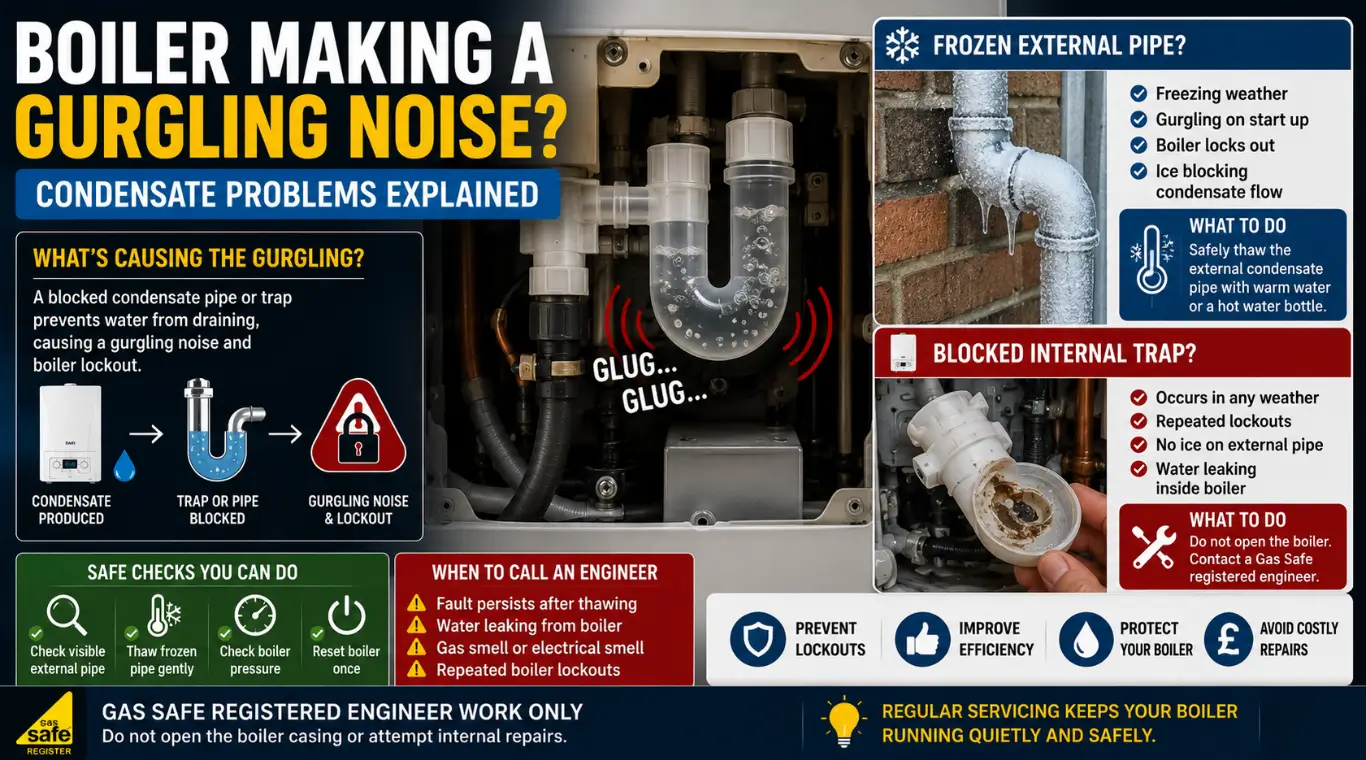
Boiler Making a Gurgling Noise? Condensate Problems Explained
A boiler gurgling noise followed by a lockout often means condensate water is not draining correctly. During freezing weather, the most likely cause is an external condensate pipe blocked with ice. If the weather is mild, or thawing the pipe does not solve the problem, the internal condensate trap or hose may be blocked.
Homeowners can safely inspect and thaw an accessible external pipe. Do not open the boiler or attempt to remove the internal condensate trap. That work must be completed by a Gas Safe registered engineer.
Table of contents
- Quick Answer
- Why Is My Boiler Making a Gurgling Noise?
- Frozen Condensate Pipe or Blocked Internal Trap?
- How to Safely Thaw a Frozen Condensate Pipe
- What If the External Pipe Is Not Frozen?
- Can a Blocked Condensate Trap Damage the Boiler?
- Other Causes of Boiler Gurgling
- How to Prevent Condensate Problems
- Find the Correct Condensate Trap or Hose
- Frequently Asked Questions
Quick Answer
| Possible problem | Common clues | What to do |
| Frozen external condensate pipe | Freezing weather, gurgling and boiler lockout | Safely thaw the accessible pipe |
| Blocked internal condensate trap | Gurgling in any weather or repeated lockouts | Contact a Gas Safe engineer |
| Air or sludge in the heating system | Noisy pipes, cold radiator areas or poor circulation | Check radiators and arrange investigation |
| Internal boiler fault | Fault code, leak or continued lockout | Stop resetting and call an engineer |
Why Is My Boiler Making a Gurgling Noise?
A condensing boiler produces water as it recovers heat from the flue gases. This water, known as condensate, passes through an internal trap or siphon and then drains away through a plastic pipe.
When the drainage route becomes blocked, water can collect behind the blockage. This may create a bubbling or gurgling sound when the boiler attempts to start.
Worcester Bosch identifies gurgling during startup and repeated boiler lockouts as two common signs of a blocked condensate pipe.
However, gurgling does not automatically prove that the condensate system is responsible. Air, sludge, limescale and circulation problems can also create similar noises.
Frozen Condensate Pipe or Blocked Internal Trap?
The first step is identifying where the blockage may be.
Signs of a Frozen External Condensate Pipe
A frozen condensate pipe is more likely when:
- Temperatures have remained below freezing
- Part of the condensate pipe runs outside
- The boiler suddenly stops during cold weather
- Gurgling begins when the boiler tries to fire
- A condensate-related fault code appears
External condensate pipes commonly freeze around exposed ends, bends or low sections where water can collect. Baxi and Worcester Bosch both identify boiler gurgling and lockout as common frozen-pipe symptoms.
Signs of a Blocked Internal Condensate Trap
An internal blockage becomes more likely when:
- The weather is not freezing
- The external pipe is visibly clear
- The boiler repeatedly locks out
- Gurgling appears to come from inside the casing
- Water is leaking beneath the boiler
- Thawing the external pipe makes no difference
Sediment or debris can gradually collect inside a condensate trap and restrict the flow of water. This can cause condensate to back up and trigger an automatic boiler shutdown.
The original repair script described a Biasi boiler where the external pipe was dry because condensate was blocked inside the appliance. Once the internal trap was professionally cleaned, drainage and boiler operation were restored.
How to Safely Thaw a Frozen Condensate Pipe
Only attempt this when the external pipe is clearly identifiable and safely accessible from ground level.
1. Locate the frozen section
Check exposed areas such as:
- The end of the pipe
- Bends or elbows
- Sections exposed to wind
- Dips where water may collect
The condensate pipe is normally plastic and may run from the boiler towards an external drain.
2. Apply gentle heat
Use:
- Warm water
- A hot-water bottle
- A microwaveable heat pack
- A warm cloth wrapped around the pipe
Never use boiling water, a naked flame, a heat gun or anything that may damage the plastic pipe.
Be aware that poured water may freeze on the ground and create a slipping hazard. Do not climb ladders or attempt to access difficult pipework.
3. Wait for the blockage to clear
Continue applying gentle heat until the ice has melted and water can drain freely.
Do not hit, cut or disconnect the pipe.
4. Reset the boiler once
Follow the reset instructions for your exact boiler model.
If the boiler starts normally and the gurgling stops, the frozen pipe was probably responsible. If it remains locked out, contact a Gas Safe registered engineer.
What If the External Pipe Is Not Frozen?
The blockage may be inside the boiler, within the condensate trap, siphon, hose or connecting pipework.
Do not remove the boiler casing or attempt to clean these components yourself. The trap forms part of the boiler’s condensate and combustion-safety arrangement and must be cleaned, refilled and refitted correctly.
Cleaning the condensate trap is normally part of professional boiler maintenance and should follow the instructions for the specific make and model.
An engineer may need to:
- Inspect the internal trap and hoses
- Clear sediment or debris
- Check for damaged seals or connections
- Confirm that the drain route is clear
- Refill the trap where required
- Check for water damage
- Test the boiler safely after the repair
A condensate trap does not always need replacing. Cleaning may be sufficient unless the trap, hose, seal or connector is damaged.
Can a Blocked Condensate Trap Damage the Boiler?
A blocked condensate route can cause water to back up inside the appliance. The boiler should normally shut down to protect itself, but continued blockage or leakage can affect nearby electrical components.
Turn the boiler off and arrange an inspection when you notice:
Other Causes of Boiler Gurgling
Air in the Heating System
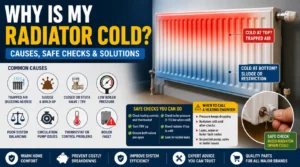
Trapped air can cause gurgling or whooshing in radiators and heating pipes. You may also notice cold areas near the top of radiators.
If the noise is mainly coming from the radiators rather than the boiler, bleeding an affected radiator may help.
Sludge or Limescale
Heating-system sludge or limescale can restrict water movement and cause gurgling, tapping or rattling noises. Other signs may include cold radiator sections, slow heating or poor circulation.
Low Boiler Pressure
Low pressure can reduce circulation and allow air to enter the heating system.
Check the pressure gauge while the system is cold and compare it with the pressure stated in your boiler manual. Do not continually repressurise a system that keeps losing pressure.
Pump or Circulation Problems
A weak, airlocked or faulty pump may also create unusual noises and poor circulation.
Pump testing requires access to internal electrical and hydraulic components and should be left to a qualified engineer.
How to Prevent Condensate Problems
Insulate External Pipework
External condensate pipework should be protected with suitable waterproof and weather-resistant insulation.
Improve the Pipe Route
An internal drainage route is generally preferred because it reduces exposure to freezing conditions. Where an external route is necessary, the installation must follow the boiler manufacturer’s instructions and current industry guidance.
Arrange Regular Boiler Servicing
During servicing, the engineer can inspect and clean the condensate trap in accordance with the manufacturer’s requirements.
This helps identify:
- Sediment build-up
- Damaged hoses
- Perished seals
- Incorrect pipe falls
- Poor insulation
- Early signs of water leakage
Find the Correct Condensate Trap or Hose
Heating & Catering Parts stocks condensate traps, siphons, hoses and related fittings for boiler brands including Baxi, Ideal, Vaillant, Worcester Bosch, Main, Potterton and Vokera.
Before ordering, check:
- Boiler manufacturer
- Exact model
- Boiler GC number
- Existing part number
- Whether the trap, hose or complete assembly is required
Do not order a replacement part based only on its appearance. Ask a qualified engineer to confirm that the component needs replacing.
Frequently Asked Questions
No. A frozen condensate pipe is likely during sub-zero weather, but an internal trap blockage, trapped air, sludge or poor circulation can produce similar noises.
No. Cleaning an internal boiler condensate trap requires opening the appliance and refitting the trap correctly. Use a Gas Safe registered engineer.
Yes. The boiler may shut down when condensate cannot drain safely, leaving the property without heating and hot water.
The code depends on the boiler model. Some Baxi boilers may show E133 or E28, while certain Worcester boilers may display EA. Always check the instructions for your exact appliance.
Yes. Once the blockage has cleared, reset the boiler once using the manufacturer’s instructions. Call an engineer if the fault immediately returns.
Key Takeaways
- A gurgling noise in a boiler often indicates a condensate pipe issue, especially if a lockout occurs during freezing weather.
- Homeowners can safely thaw external condensate pipes, but internal blockages should be addressed by a Gas Safe registered engineer.
- Signs of a frozen external pipe include freezing weather, gurgling sounds, and a lockout; clear the external pipe if accessible.
- If the external pipe is not frozen, internal blockages may occur which require professional cleaning and inspection.
- Prevent condensate problems by insulating pipes, improving drainage routes, and arranging regular boiler servicing.