Worcester U9 Fault Code: What It Means and What to Do
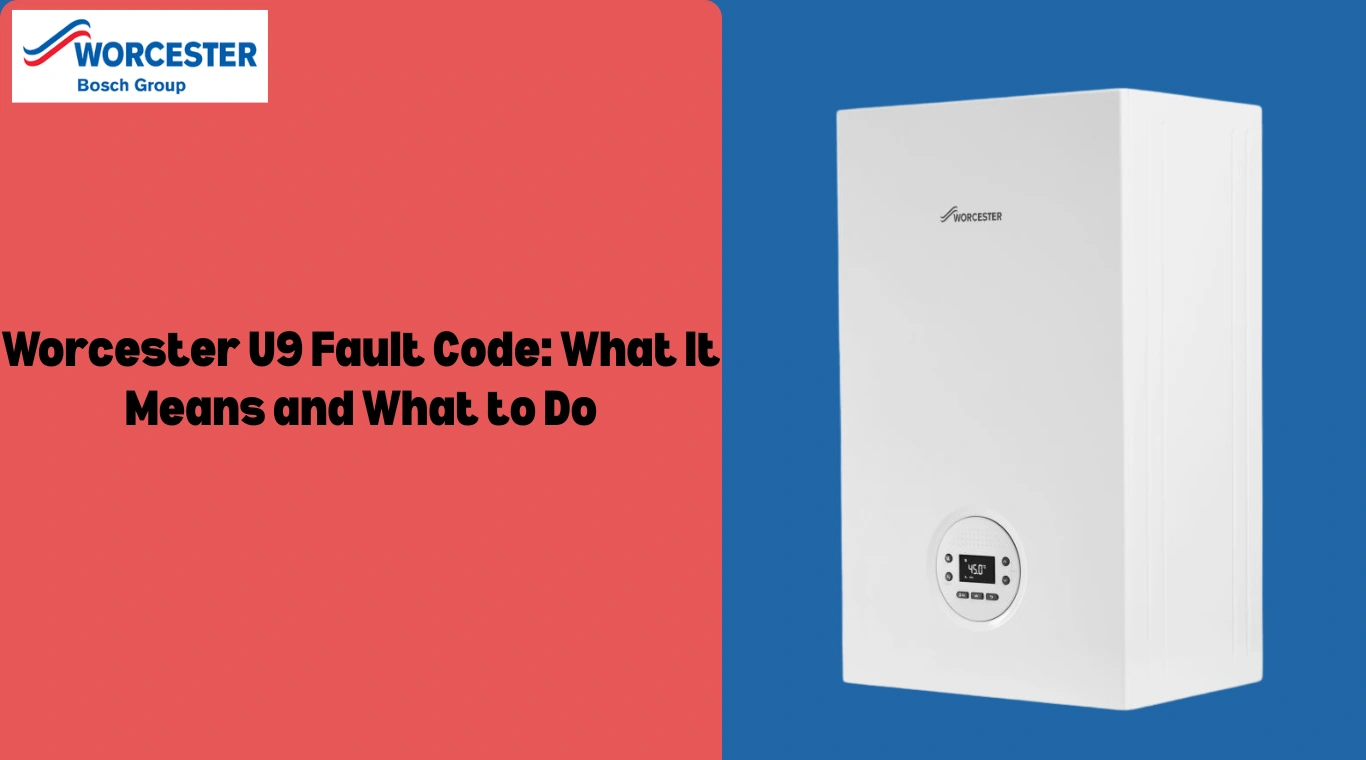
If your Worcester Bosch boiler is showing U9, it may not be a conventional fault code. On certain older Worcester Bosch Greenstar CDi boilers with a two-character display, U0 to U9 represent temperatures from 100°C to 109°C.
This means U9 shows that the boiler flow temperature has reached 109°C.
A U9 display does not identify one failed part. However, if it keeps returning, the temperature rises quickly, or the boiler has a flashing reset or fault light, there may be a circulation or temperature-control issue that needs professional diagnosis.
Table of contents
- Quick Answer
- Is U9 a Fault Code or a Temperature Display?
- Which Worcester Boilers Can Show U9?
- Worcester U9 Fault Code Troubleshooting: Safe Steps for Homeowners
- Why Might a Worcester Boiler Reach U9?
- When Should You Call a Gas Safe Engineer?
- What a Heating Engineer May Check
- Parts That May Be Related
- How to Help Prevent Worcester U9 Fault Code Returning
- Related Worcester Bosch Guides
- Need Help Finding the Correct Worcester Part?
- Frequently Asked Questions
Quick Answer
On applicable older Worcester Bosch boilers, U9 means the boiler is displaying a flow temperature of 109°C. This is a high temperature reading. It may happen when heat is not moving around the heating system properly. Allow the boiler to cool, avoid repeatedly resetting it, and arrange a Gas Safe registered engineer if U9 keeps returning.
Is U9 a Fault Code or a Temperature Display?
On older Worcester Bosch Greenstar CDi-style display systems, U9 is a temperature reading rather than a standard error code.
| Display | Temperature Shown |
| U0 | 100°C |
| U1 | 101°C |
| U5 | 105°C |
| U9 | 109°C |
This is different from conventional Worcester fault codes such as EA, E9, 224 or 227.
A reading of 109°C is unusually high during normal boiler operation. The important issue is not only why U9 is showing, but why the boiler is reaching that temperature.
Which Worcester Boilers Can Show U9?
This guide is mainly relevant to older Worcester Bosch Greenstar CDi boilers and similar models with a two-character display.
Not every Worcester Bosch boiler uses the same display system. Newer Greenstar boilers may show three-digit temperatures, warning symbols or different fault-code formats.
Before relying on this guide, check:
- The exact boiler model shown on the front panel.
- The boiler data plate and GC number.
- Whether the display only shows U9.
- Whether another code appears before or after U9.
- Whether a reset button or fault light is flashing.
If you see U9 together with E9, 224, 227, 9U 223 or another longer code, do not assume it is the same issue. The full code and boiler model must be checked.
Worcester U9 Fault Code Troubleshooting: Safe Steps for Homeowners
Time needed: 5 minutes
Do not remove the boiler casing, touch internal wiring, alter the pump, open internal boiler valves or attempt to replace parts yourself.
- Turn Off the Heating Demand
Use your thermostat, programmer or heating controls to turn the heating demand off.
Do not repeatedly make the boiler fire while it is showing U9. Letting the appliance cool helps prevent further overheating and allows you to see whether the issue returns during the next heating cycle. - Step 2: Check for Any Emergency Warning Signs
If you smell gas:
Do not operate electrical switches.
Do not use naked flames.
Open windows and doors.
Leave the property.
Call the National Gas Emergency Service on 0800 111 999 from a safe location.
A gas smell is separate from a U9 display, but it must always take priority. - Take a Clear Photo of the Boiler Display
Before resetting the boiler, take a photo of the full display.
Make sure the photo shows:
U9 on the screen.
Any flashing reset button.
Any warning light.
Any extra letters or numbers.
The boiler model, if visible.
This can help an engineer identify whether U9 is simply a temperature display or part of another fault condition. - Check the Boiler Pressure When It Is Cool
Wait until the boiler has cooled before looking at the pressure gauge.
Check whether the pressure is within the normal range advised for your heating system. Many sealed heating systems operate around 1 to 1.5 bar when cold, but you should follow the guidance for your exact boiler and system.
Do not overfill the system.
If the pressure is very low, has dropped suddenly or keeps falling, arrange for an engineer to investigate the cause. - Check That Not Every Radiator Valve Is Closed
If all radiator valves are fully closed, heat may not have a proper route through the heating system.
Check that at least one radiator is available for the system to circulate through.
Do not adjust boiler bypass settings or internal valves.
If your radiators have thermostatic radiator valves, make sure they are not all turned fully off. - Check for Cold Tops on Radiators
A radiator that is cold at the top but warmer at the bottom may have trapped air inside it.
Only bleed a radiator if you know how to do it safely.
Turn the heating off and let the radiators cool.
Place a cloth beneath the radiator bleed point.
Use a radiator key and turn it slowly.
Allow trapped air to escape.
Close the bleed point once water begins to appear.
Check the boiler pressure afterwards.
If the pressure drops after bleeding, follow your boiler’s normal filling instructions. Do not keep topping up the boiler if pressure repeatedly falls, as there may be a leak or another system issue. - Reset the Boiler Once Only
Once the boiler has cooled:
Check the reset instructions in your boiler manual.
Carry out one reset only.
Watch whether U9 returns quickly.
Do not keep resetting the boiler repeatedly.
If U9 returns after the reset, arrange for a Gas Safe registered engineer to inspect the boiler and heating system.
Why Might a Worcester Boiler Reach U9?
U9 does not prove that one specific part has failed. It only tells you that the displayed boiler temperature has reached 109°C on applicable older Worcester models.
A heating engineer may investigate several possible causes.
Restricted Water Circulation
If hot water cannot move away from the boiler quickly enough, the boiler temperature can rise rapidly.
This may happen because of a circulation problem in the heating system.
Possible causes include restricted pipework, closed valves, blocked filters, system sludge, air in the system or poor flow through radiators.
Circulating Pump Problems
The boiler pump moves heated water around the heating system.
If the pump is not working correctly, is blocked, is weak or is not receiving the correct control signal, heat may build up inside the boiler.
A pump issue can cause a high temperature display, but U9 alone does not confirm that the pump needs replacing.
Air in the Heating System
Air trapped in radiators or pipework can reduce water circulation.
This may lead to uneven radiator heating, cold radiator tops, noisy pipework or poor heat distribution.
Bleeding radiators may help where trapped air is the cause. However, recurring air in the system may indicate another issue, such as water loss or a leak.
System Sludge or Debris
Over time, heating systems can develop sludge, rust particles and debris.
This can restrict water flow through radiators, pipework, filters, pumps or heat exchangers.
An engineer may check the condition of the system water and decide whether cleaning, flushing or filter maintenance is needed.
Do not assume that a power flush is automatically the correct repair. The system needs to be assessed first.
Heat Exchanger Restrictions
On some boilers, restricted heat transfer can lead to rapid temperature rise.
This may be more noticeable during central heating, hot water demand or both.
A heat exchanger should only be assessed and replaced after proper diagnosis. Do not order a replacement heat exchanger based on U9 alone.
Temperature Sensor, Wiring or PCB Issues
The boiler uses sensors to monitor temperature. If a temperature sensor is inaccurate, wiring is damaged or the control board is not managing the pump correctly, the boiler may show abnormal temperature readings or behave as though it is overheating.
These checks require proper testing by a qualified engineer.
When Should You Call a Gas Safe Engineer?
Arrange professional help if:
- U9 keeps returning.
- The boiler loses heating or hot water.
- The boiler temperature rises quickly after firing.
- The boiler makes banging, rumbling, kettling or whistling noises.
- Pressure keeps dropping.
- You notice a leak.
- Radiators are heating unevenly.
- Hot water turns hot and cold.
- Another fault code appears with U9.
- The boiler does not restart after cooling.
Do not attempt to remove the boiler case or test internal components yourself.
What a Heating Engineer May Check
A qualified engineer may carry out checks such as:
- Confirming the exact Worcester boiler model and GC number.
- Checking whether U9 is a temperature display or part of another stored fault.
- Reviewing the fault history where available.
- Checking whether the issue happens during heating, hot water or both.
- Checking pump operation and circulation.
- Checking system pressure, leaks and trapped air.
- Checking filters, valves, pipework and possible restrictions.
- Testing temperature sensors and wiring.
- Checking control-board outputs after other circulation issues have been ruled out.
- Confirming the correct replacement part number before ordering any component.
Parts That May Be Related
Depending on the diagnosis and boiler model, an engineer may identify a problem with:
- Circulating pump.
- Flow temperature sensor.
- Pump wiring or connections.
- Plate heat exchanger.
- Main heat exchanger.
- PCB or pump-control circuit.
- Magnetic filter.
- System water quality.
Do not buy a pump, sensor, heat exchanger or PCB based on the U9 display alone.
How to Help Prevent Worcester U9 Fault Code Returning
- Arrange regular boiler servicing.
- Investigate repeated pressure loss instead of continually topping up.
- Make sure at least one suitable circulation route remains open when the heating is running.
- Deal with cold-top radiators or recurring trapped air early.
- Ask an engineer to assess system water quality if sludge is suspected.
- Use suitable inhibitor or water treatment where recommended.
- Do not ignore unusual noises, overheating, poor hot water performance or repeated boiler resets.
Related Worcester Bosch Guides
- Worcester Bosch Boiler Fault Codes
- Worcester E9 and 224 Fault Code
- Worcester 227 Fault Code
- Worcester 2951 Fault Code
- Worcester Boiler Pumps
- Worcester Heat Exchangers
Need Help Finding the Correct Worcester Part?
Once a qualified engineer has identified the faulty component, Heating & Catering Parts can help you find the correct Worcester replacement part.
Please provide:
- Boiler model.
- GC number.
- A clear photo of the boiler data plate.
- A photo of the existing component.
- The manufacturer part number, where visible.
- Any additional code shown with U9.
Do not order a Worcester pump, sensor, heat exchanger or PCB based on the U9 display alone.
Frequently Asked Questions
No. On applicable older Worcester Greenstar CDi displays, U9 is a temperature display showing 109°C. E9 is a separate fault-code family and must be checked against the exact boiler model.
Not automatically. Low pressure may affect a heating system, but U9 does not prove pressure is the cause. Check the pressure only when the system is cool and follow the guidance for your specific boiler.
You can follow the reset procedure in your boiler manual once the boiler has cooled. Do not keep resetting it if U9 returns.
This can suggest a circulation issue in the heating circuit, but an engineer needs to determine whether the cause is related to the pump, air, restrictions, sensors, controls or another issue.
No. Do not remove the boiler casing or attempt internal repairs. A suitably qualified engineer should diagnose and replace boiler components.