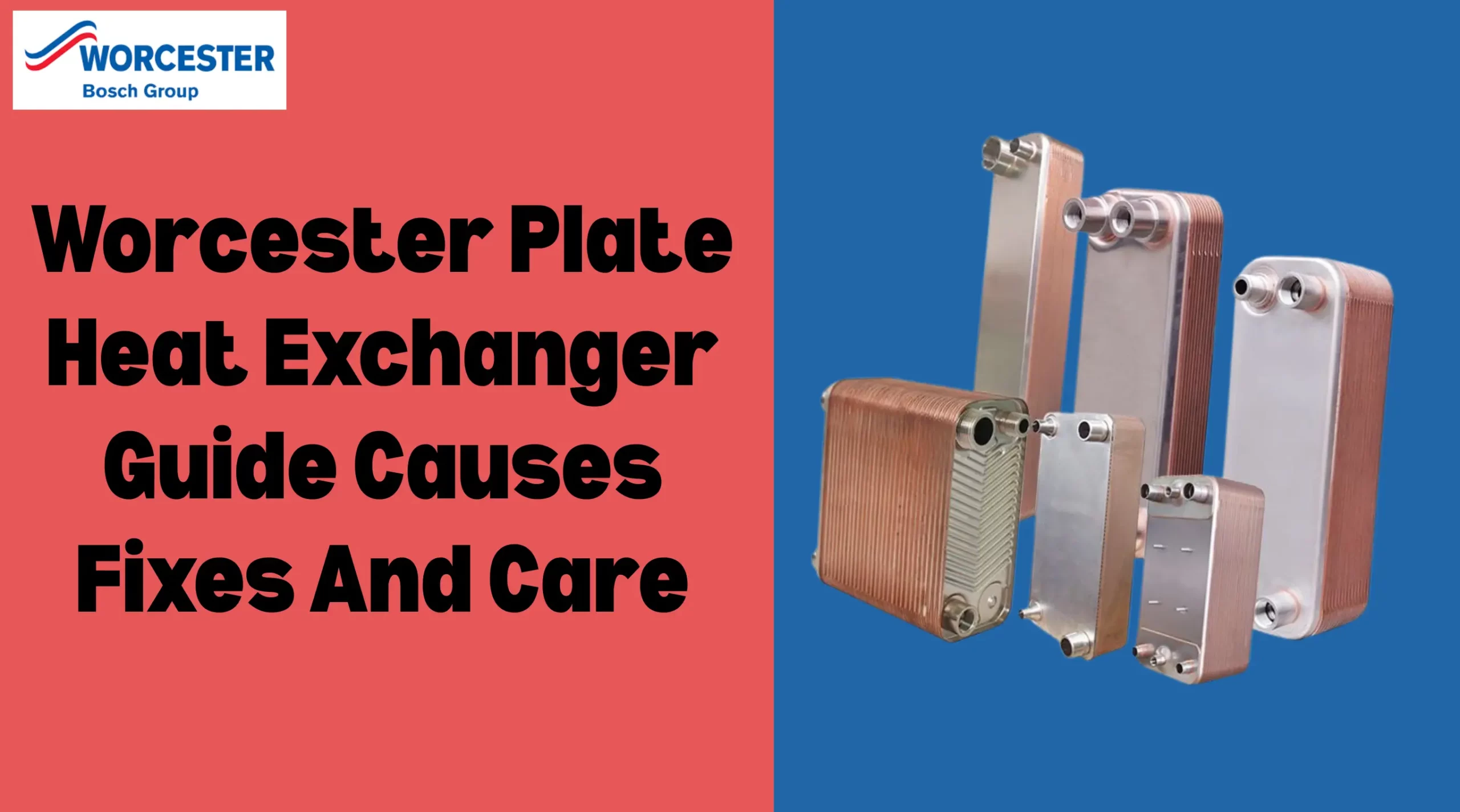
Worcester Plate Heat Exchanger Guide Causes Fixes And Care
If your Worcester combi boiler struggles to deliver steady hot water, the plate heat exchanger may need attention. This guide explains what it does, how it works, what causes problems, and the safe next steps. You will also learn how to reduce the risk of repeat blockages in hard water areas.
Table of contents
- What is a Worcester plate heat exchanger
- How a plate heat exchanger works in a Worcester combi boiler
- Causes of Worcester plate heat exchanger issues
- Step by step process to fix Worcester plate heat exchanger issues
- What the engineer may do
- Preventing plate heat exchanger problems
- Conclusion
- Frequently Asked Questions
What is a Worcester plate heat exchanger
A Worcester combi boiler uses a plate heat exchanger to heat tap water on demand. It stacks many thin corrugated plates together with gaskets between them. Hot primary water flows through one set of channels. Cold mains water flows through the next set of channels. Heat passes through the metal plates, so both water paths stay separate and never mix.
How a plate heat exchanger works in a Worcester combi boiler
Alternating channels
The gaskets guide the fluids into alternating paths. One channel carries hot primary water. The next channel carries cold mains water. This layout creates a large heat transfer surface area in a compact unit.
Counter flow arrangement
In many designs, the two fluids run in opposite directions. This counter flow keeps a strong temperature difference along the plates. That boosts efficiency and helps deliver faster hot water at outlets.
Corrugated plate design
The plates have a stamped pattern that creates turbulence in the flow. Turbulence improves heat transfer by mixing the water in each channel. It also helps reduce hotspots, although hard water scale can still build up.
Heat transfer process
Heat moves from the hot fluid to the plate surface. It then travels through the plate material. It then moves from the plate into the cold mains water. This fast transfer supports stable hot water when the plate pack stays clean.
Causes of Worcester plate heat exchanger issues
Hard water scale buildup
Limescale can form inside the domestic hot water channels. Scale restricts flow and reduces heat transfer, so hot water performance drops.
Debris and sludge effects
Sludge in the heating circuit can reduce heat transfer on the primary side. Poor inhibitor levels can speed up corrosion and fouling.
Diverter valve or flow sensor issues
The diverter valve directs heat to hot water or heating. If it sticks, hot water can turn unstable. A weak flow signal can also cause poor hot water control.
Temperature sensor reading problems
Sensors guide burner output and temperature control. Inaccurate readings can lead to temperature swings and short cycling.
Step by step process to fix Worcester plate heat exchanger issues
Time needed: 10 minutes
Follow the below given steps to fix the worcester plate heat exchanger issues
- Turn off the boiler
Use the control panel to switch the boiler off. Let it cool down before any checks near the unit.
- Try one reset only
Turn the boiler back on and test a hot tap for a short time. If the issue returns, stop further resets and book an engineer.
- Check outlet restrictions
Clean the tap aerator or shower head if limescale blocks it. Test again to confirm whether the issue affects one outlet or the whole home.
- Check boiler pressure for heating
If the boiler shows low pressure, follow the manual steps for your Worcester model. Stop if you feel unsure and book an engineer.
- Book a Gas Safe engineer for diagnosis
Ask for checks on temperature rise, flow rate, diverter valve operation, and sensor readings. Ask for confirmation on whether the plate heat exchanger needs cleaning or replacement.
What the engineer may do
Clean and descale the plate heat exchanger when scale blocks the channels. Replace the plate heat exchanger and seals when cleaning fails. Fit a magnetic filter and add inhibitor to protect the primary circuit. Add scale control on the mains supply in hard water areas.
Preventing plate heat exchanger problems
Book an annual Worcester service and ask for water quality checks. Keep hot water temperature sensible rather than maxed out. Use a scale reducer or softener in hard water areas. Fit a magnetic filter and maintain inhibitor levels. Ask for a system clean if sludge causes repeated issues.
Conclusion
A Worcester plate heat exchanger transfers heat from the primary circuit into your tap water without mixing the two water paths. Scale and debris can restrict the channels and reduce heat transfer. Safe checks can help you confirm a whole house pattern versus a single outlet issue. A Gas Safe engineer can test, clean, or replace the plate heat exchanger and add protection to reduce repeat faults.
Also here find a review on Worcester boiler lifespan
Frequently Asked Questions
The design of a plate heat exchanger (PHE) comprises several heat transfer plates. Held by a fixed plate and a loose pressure plate to form a complete unit. Each heat transfer plate has a gasket arrangement, providing two separate channel systems. The arrangement of the gaskets allows through flow in single channels.
The furnace burner flames should be strong flames that are primarily blue with a hint of yellow. If the furnace flames are yellow all over, that means the flame isn’t strong enough to heat your home – indicating a cracked heat exchanger or another problem with the furnace.
Stainless steel is a commonly used metal for the plates because of its ability to withstand high temperatures, its strength, and its corrosion resistance. The plates are often spaced by rubber sealing gaskets which are cemented into a section around the edge of the plates.
Plate heat exchanger flow patterns can be single- or multi-pass. A single-pass arrangement means each fluid flows in the same respective direction across all the plates in the unit. A multi- pass arrangement is designed so fluids can change their respective flow directions.