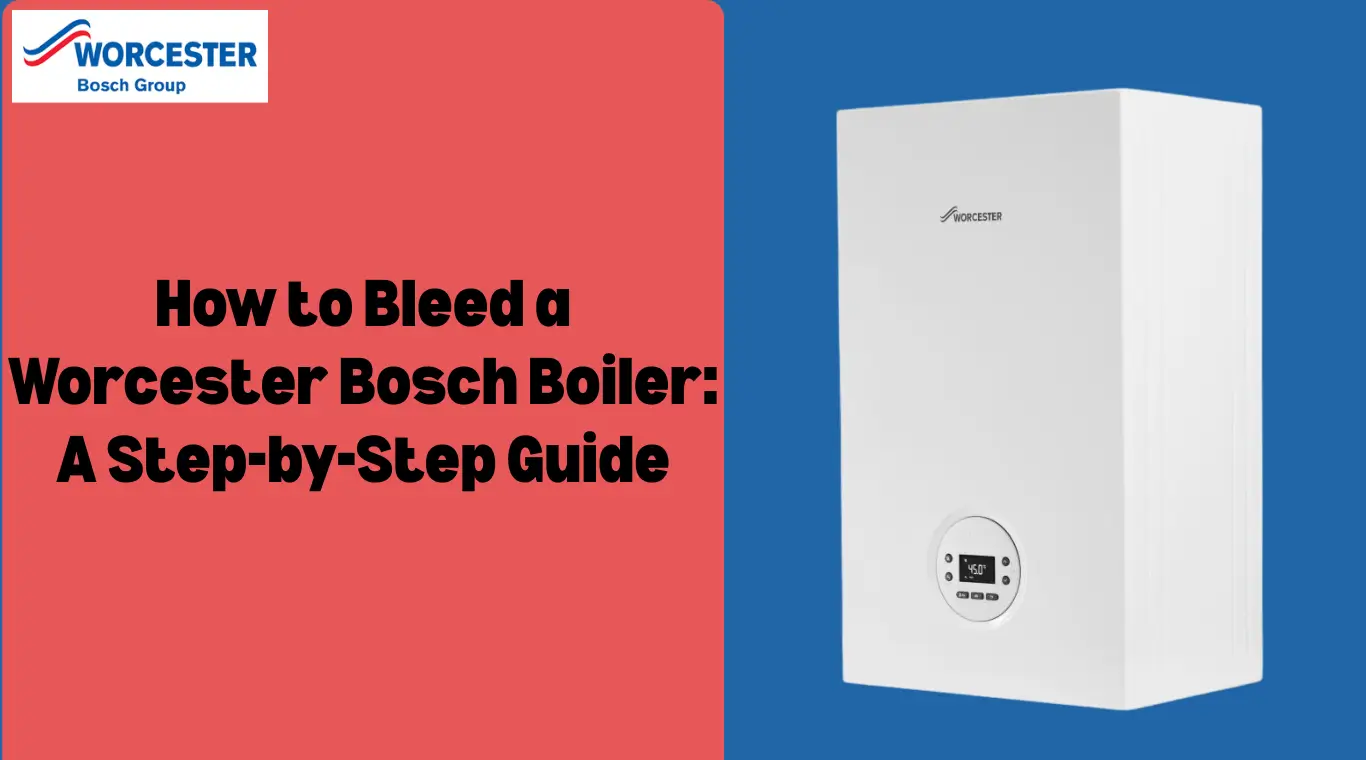
How to Bleed a Worcester Bosch Boiler: A Step-by-Step Guide
Are your radiators cold at the top but warm at the bottom? This usually means there’s air trapped in your heating system. Don’t worry bleeding your Worcester Bosch boiler system is a simple job that can help your radiators heat up properly again. In this guide, we’ll show you how to safely release the trapped air and get your home warm and cosy.
What Does It Mean to Bleed a Boiler?
Bleeding a boiler means letting out the air that’s stuck inside your radiators. This trapped air stops hot water from flowing properly, which causes cold spots. By bleeding the radiators, you allow the air to escape so your heating system works better.
How to Bleed a Worcester Bosch Boiler
Time needed: 5 minutes
Follow the given below steps to bleed a worcester bosch boiler
- Turn Off the Boiler
Switch off your boiler and let it cool down. This is important for your safety so you don’t get burned.
- Find the Radiator Bleed Valve
Look at the top of the radiator there’s a small valve there. You’ll need a radiator key or a flathead screwdriver, depending on your radiator type.
- Use a Cloth or Bowl
Put a cloth or small bowl under the valve to catch any drips of water. This stops spills and keeps your floor clean.
- Open the Valve Slowly
Turn the valve anti-clockwise (left) using the key or screwdriver. You’ll hear a hissing noise as the air escapes. When water starts to come out steadily, close the valve tightly by turning it clockwise (right).
- Check the Boiler Pressure
Once all the radiators are bled, look at your boiler’s pressure gauge. If the pressure is too low (under 1 bar), top it up to between 1–2 bars using the filling loop.
- Turn the Boiler Back On
Switch your Worcester Bosch boiler back on and wait a few minutes. Your radiators should now heat up evenly. If they don’t, or if the boiler shows an error, you might need expert help.
Why You Should Bleed Your Boiler
Bleeding your boiler system has a lot of benefits:
- It helps your radiators heat up properly
- It saves energy and reduces heating bills
- It keeps your boiler running smoothly for longer
- It makes your home more comfortable
When to Call a Gas Safe Engineer
You should always call a Gas Safe registered engineer if:
- You smell gas in your home
- Your boiler keeps losing pressure even after bleeding
- There are leaks around the boiler or radiators
- The boiler shows error codes you don’t understand
- You’re unsure or don’t feel safe doing any of the steps
Never try to open or fix parts inside the boiler yourself. Gas appliances should only be handled by trained professionals.
Conclusion
Bleeding a Worcester Bosch boiler system is easy and can make a big difference to your home’s heating. Follow the steps above to remove trapped air and improve your system’s performance. If you’re still having trouble after bleeding the radiators, it’s time to call in a qualified engineer.
Frequently Asked Questions
An air purge on a Worcester boiler is an automated function that cycles the pump on and off without firing the burner to push trapped air out of the system. This cycle runs for 10–15 minutes and often triggers automatically upon first startup, after a power outage, or after a system refill.
The first radiator to bleed should be the radiator downstairs on the lowest floor and the furthest away from the boiler (typically living room radiators).
Locate the bleed valve – Once your boiler is turned off and the system has cooled down, locate the bleed valve. This is typically found at the top of the radiator. Open the valve – Insert the radiator bleed key into the valve and turn it slowly to release the trapped air.