Boiler Losing Pressure? Common Causes & What To Check
Estimated reading time: 5 minutes
A boiler that keeps losing pressure can be frustrating, especially when you refill the system and the pressure drops again within hours or days. Low pressure does not always mean your boiler needs replacing. In many cases, the cause could be a small leak, expansion vessel issue, pressure relief valve problem or another component that needs checking. Understanding why the pressure is dropping can help you know what simple checks you can safely do yourself and when a heating engineer is needed.
Table of contents
- What Pressure Should a Boiler Normally Have?
- Quick Answer
- What Pressure Should a Boiler Normally Have?
- Why Does My Boiler Keep Losing Pressure?
- The Role of the Expansion Vessel
- Does a Losing Pressure Boiler Always Need a New Expansion Vessel?
- Is It Safe To Keep Topping Up Boiler Pressure?
- Replacement Parts for Boiler Pressure Problems
- FAQs
What Pressure Should a Boiler Normally Have?
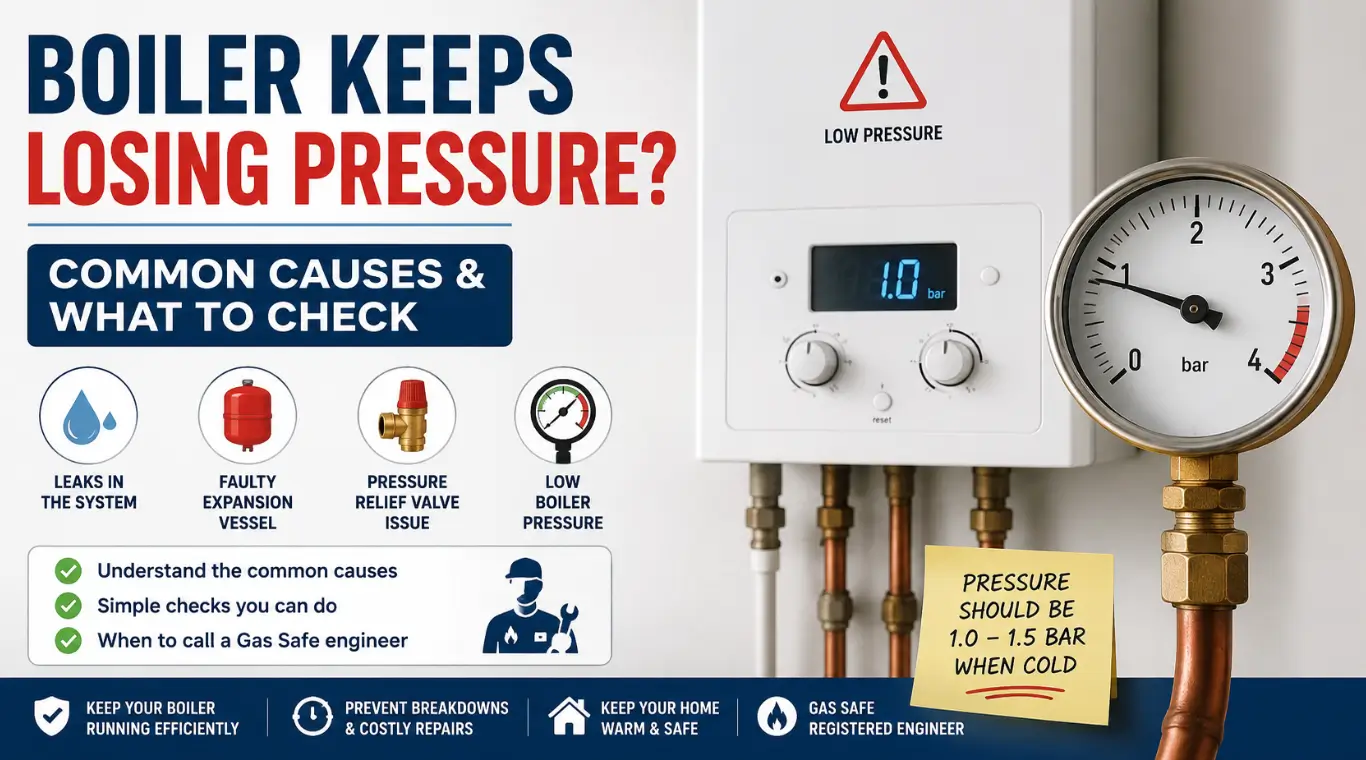
Most modern combi boilers usually operate around 1–1.5 bar when the system is cold, although the correct pressure can vary depending on the boiler model. When the heating is running, it is normal for pressure to rise slightly because the water inside the heating system expands. If the pressure regularly drops close to zero, the boiler may stop working or display a fault code.
Quick Answer
If your boiler keeps losing pressure, it usually indicates an underlying issue rather than a faulty boiler. Common causes include a leak in the heating system, a faulty expansion vessel, a leaking pressure relief valve (PRV), recently bled radiators, or an internal boiler fault. Most boilers should maintain a pressure of 1.0-1.5 bar when cold. If you’re repeatedly topping up the pressure, check for visible leaks, ensure the filling loop is closed, and inspect the external PRV discharge pipe. If the pressure continues to drop, contact a Gas Safe registered engineer to diagnose and repair the problem safely.
What Pressure Should a Boiler Normally Have?
Most modern combi boilers usually operate around 1-1.5 bar when the system is cold, although the correct pressure can vary depending on the boiler model.
When the heating is running, it is normal for pressure to rise slightly because the water inside the heating system expands.
If the pressure regularly drops close to zero, the boiler may stop working or display a fault code.
Why Does My Boiler Keep Losing Pressure?
Several issues can cause pressure loss.
Possible Cause | Why Pressure Drops | Who Should Investigate |
Leak in heating system | Water escapes from pipework, radiator valves or connections | Homeowner visual check / heating engineer |
Expansion vessel problem | The system cannot correctly absorb water expansion | Gas Safe engineer |
Pressure relief valve issue | Water may discharge outside when pressure rises too high | Gas Safe engineer |
Recently bled radiators | Removing trapped air can reduce system pressure | Homeowner |
Filling loop not closed correctly | Water pressure may not remain stable | Homeowner visual check |
Pressure sensor fault | Boiler may receive incorrect pressure readings | Gas Safe engineer |
| Internal boiler leak | Components inside the boiler may be leaking | Gas Safe engineer |
The Role of the Expansion Vessel
The expansion vessel is an important part inside many boilers. When your heating system warms up, the water expands. The expansion vessel contains an air section that acts like a cushion, allowing this expansion without the pressure rising too high.
If the expansion vessel loses its air charge or develops a fault, the boiler pressure may rise quickly when heating is on and then drop again after the system cools.
Does a Losing Pressure Boiler Always Need a New Expansion Vessel?
Not always.
An expansion vessel problem should be diagnosed properly before replacing parts.
A heating engineer may check:
- the vessel condition
- the internal air charge
- whether the diaphragm is working correctly
- whether the vessel size is suitable for the system
Sometimes servicing or adjustment may solve the issue, while other cases require replacement.
Is It Safe To Keep Topping Up Boiler Pressure?
Occasionally topping up after maintenance, such as bleeding radiators, can be normal. However, repeatedly adding water every few days usually means there is an underlying issue. Constantly refilling a system can introduce fresh water, which may increase corrosion and sludge inside the heating system.
Replacement Parts for Boiler Pressure Problems
After proper diagnosis, common replacement parts may include:
- Expansion vessels
- Pressure relief valves (PRVs)
- Pressure sensors
- Filling loops
- Pressure gauges
- Seals and washers
Heating & Catering Parts supplies replacement boiler parts for leading manufacturers including Worcester Bosch, Vaillant, Baxi, Ideal, Alpha, Viessmann and more.
FAQs
A pressure drop overnight may be caused by a leak, PRV issue, expansion vessel problem or another system fault.
Yes. Pressure loss can happen without an obvious visible leak, especially if water is escaping through the PRV discharge pipe or a hidden area.
Not always. Low pressure is usually a symptom of another issue that needs diagnosing.
A common reason is an expansion vessel or pressure-control issue, but a heating engineer should confirm the exact cause.
Usually not. Many pressure problems can be repaired once the actual cause is identified.
Key Takeaways
- A boiler losing pressure often indicates issues like leaks, an expansion vessel fault, or a pressure relief valve problem rather than needing replacement.
- Most combi boilers should maintain 1–1.5 bar pressure when cold; if it drops significantly, this may lead to malfunctions.
- Common causes of pressure drops include leaks, a faulty expansion vessel, or improper filling loop closure, which homeowners can check.
- Occasionally topping up pressure is fine, but frequent refills suggest an underlying problem that requires attention.
- Diagnosing the issue correctly is crucial; common replacement parts include expansion vessels, pressure relief valves, and pressure sensors.