Boiler Working But No Hot Water and No Error Code?
Estimated reading time: 9 minutes
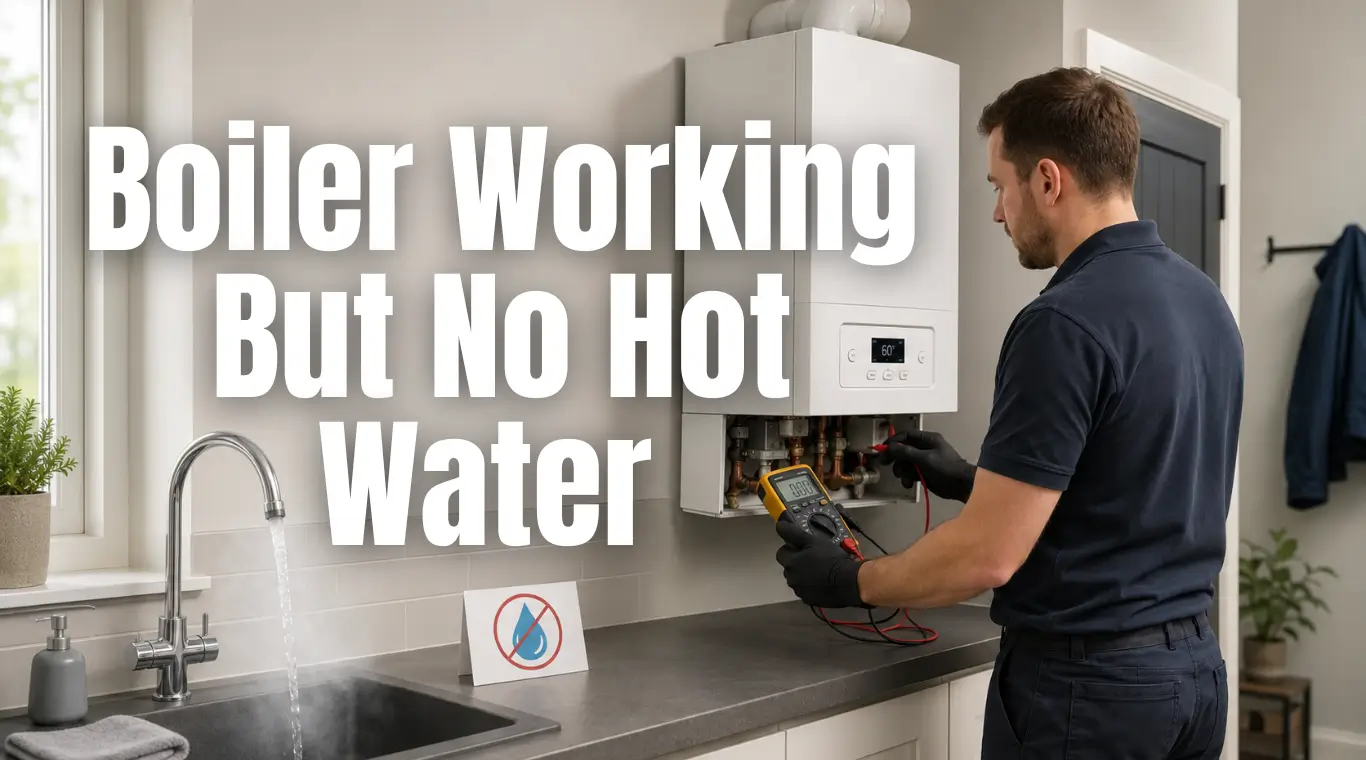
If your boiler is working but there is no hot water and no error code, the fault may be caused by a part that is giving the boiler incorrect information rather than failing completely. On a combi boiler, common causes include a faulty hot water sensor, flow sensor issue, diverter valve fault, blocked plate heat exchanger, wiring problem or PCB-related issue.
Homeowners can carry out a few safe external checks, but internal boiler diagnosis and repair should be handled by a qualified engineer. When someone needs to fix, fit or service a gas boiler, they need to be Gas Safe registered.
Quick Answer
A combi boiler can show no fault code but still fail to produce hot water if the boiler thinks everything is operating within a normal range. This can happen when a sensor is inaccurate, the boiler does not correctly detect hot water demand, or heat is not being transferred properly to the domestic hot water side.
The issue is not always the same on every boiler brand or model, so diagnosis should be based on the exact boiler, symptoms and manufacturer data.
Why Can a Boiler Have No Error Code?
Boiler fault codes usually appear when the control board detects a clear failure, such as an open circuit, short circuit, ignition fault or safety lockout.
However, some faults are more subtle. A sensor can drift out of calibration and still send a signal that looks believable to the PCB. In that case, the boiler may not realise there is a fault.
For example, a domestic hot water NTC thermistor may report that the water is already hot, even when the actual tap water is only lukewarm. The boiler may then reduce or stop burner operation because it believes the hot water temperature has already been reached.
Common Causes of No Hot Water With No Error Code
| Possible causes | Why it can cause no hot water | Who Should Investigate |
| Domestic hot water NTC thermistor fault | The sensor may send an incorrect temperature reading to the PCB. | Gas Safe engineer |
| Flow sensor or flow turbine issue | The boiler may not correctly detect hot water demand from the tap. | Gas Safe engineer |
| Diverter valve fault | Heat may not be directed properly to the hot water circuit. | Gas Safe engineer |
| Blocked plate heat exchanger | Heat transfer to the tap water may be restricted by sludge or scale. | Gas Safe engineer |
| PCB or wiring issue | The boiler may not process hot water demand or sensor signals correctly. | Gas Safe engineer |
| Mixer tap or shower valve issue | Cold water may be mixing with hot water after it leaves the boiler. | Gas Safe engineer |
| Low system pressure | Some boilers may not operate correctly if pressure is too low. | Home Owner |
| Boiler settings or preheat mode issue | The boiler may be set in a mode that affects hot water behaviour. | Home Owner |
Safe Checks for Homeowners
Before calling an engineer, there are a few safe checks you can do without opening the boiler.
Check more than one hot tap
Try the kitchen tap, bathroom basin and shower separately. If only one outlet has poor hot water, the issue may be with that tap, shower cartridge or mixer valve rather than the boiler itself.
Check whether the heating still works
Turn the central heating on and check whether the radiators start to warm up. If the heating works normally but hot water does not, the fault may be more specific to the domestic hot water side of the boiler.
Check the boiler pressure
Look at the pressure gauge when the system is cold. Many domestic boilers are usually around 1.0–1.5 bar when cold, but always follow the pressure range shown in your boiler manual. If pressure keeps dropping after topping up, there may be a leak, expansion vessel issue or pressure relief valve problem.
Check boiler settings
Make sure hot water mode has not been switched off, the temperature has not been turned down, and any eco/preheat settings are understood. Some combi boilers behave differently depending on whether preheat or eco mode is enabled.
Check other gas appliances
If you have a gas hob, check whether it is working normally. If no gas appliances are working, there may be a wider gas supply issue. Do not attempt to repair the boiler yourself.
Do not remove the boiler casing
Do not remove the boiler cover or touch internal parts. Internal checks can involve gas, combustion, electrical components, hot water, pressure and safety controls.
What a Heating Engineer May Check
A qualified engineer will normally follow a logical diagnostic process instead of replacing parts at random.
They may check:
Whether the boiler detects hot water demand
Whether the flow sensor or turbine is sending a signal
Whether the domestic hot water NTC thermistor reading matches the real pipe temperature
Whether the diverter valve is moving correctly
Whether the plate heat exchanger is transferring heat properly
Whether heating works normally
Whether there are signs of wiring, connection or PCB issues
Whether the boiler data matches the manufacturer’s service manual
Where gas work, combustion checks, internal electrical testing or boiler casing removal is required, this should be handled by a suitably qualified Gas Safe registered engineer. Gas Safe Register is the official list of engineers qualified to work safely and legally on gas appliances.
How an NTC Thermistor Can Cause No Hot Water
An NTC thermistor is a temperature sensor. NTC stands for Negative Temperature Coefficient.
In simple terms, as the water temperature rises, the electrical resistance of the sensor changes. The boiler PCB uses this reading to decide whether more heat is needed. If the sensor is inaccurate, the boiler may receive the wrong temperature information.
For example:
| Real Situation | What the Boiler May Think |
| Tap water is only lukewarm | Sensor reports that water is already hot |
| Hot water demand is present | Boiler reduces or stops firing |
| No full sensor failure is detected | No error code appears |
This is why a boiler can appear to work normally but still fail to deliver proper hot water.
Important: NTC resistance values vary by boiler and sensor type. Engineers should always compare multimeter readings with the manufacturer’s resistance chart for the exact boiler model.
Other Parts That May Be Related
A no-hot-water fault with no error code is not always caused by the NTC sensor. Other parts may be involved.
Flow sensor or flow turbine
The boiler needs to know when a hot tap has been opened. If the flow sensor or turbine is weak, blocked or not sending the correct signal, the boiler may not respond correctly to hot water demand.
Diverter valve
In a combi boiler, the diverter valve helps direct heat between central heating and domestic hot water. If it sticks or fails, the boiler may heat radiators but not provide proper hot water.
Plate heat exchanger
The plate heat exchanger transfers heat from the boiler’s primary circuit to the water going to the taps. If it becomes restricted with scale or sludge, hot water performance may drop.
PCB or wiring
If the boiler is receiving the correct signals but not responding properly, the PCB or wiring may need testing. A PCB should only be replaced after proper diagnosis.
When to Call a Gas Safe Engineer
Call a Gas Safe registered engineer if:
There is no hot water from any tap
The boiler fires briefly then stops
Heating works but hot water does not
The boiler makes unusual noises
Pressure rises or drops repeatedly
You suspect a sensor, valve, PCB, pump, fan or gas-related fault
You would need to remove the boiler casing to investigate
Gas Safe Register also provides a way to find and check registered engineers by postcode and appliance type.
Parts That May Be Needed After Diagnosis
Depending on the fault, the engineer may identify a problem with:
Domestic hot water NTC thermistor
Flow sensor or flow turbine
Diverter valve or diverter valve motor
Plate heat exchanger
PCB
Wiring harness
Temperature sensor seal or washer
Pressure sensor
Always confirm compatibility before ordering. Use the boiler model, GC number, part number from the old component, or a clear photo of the boiler data plate and faulty part.
Need Help Finding the Correct Boiler Part?
Heating & Catering Parts can help you identify compatible boiler spares for many leading brands.
Before ordering, check:
Boiler brand and model
GC number
Existing part number
Photos of the old component
Whether the part is new, refurbished or compatible
Whether the fault has been properly diagnosed
Need help? Contact Heating & Catering Parts with clear photos of the boiler data plate and the part you need.
FAQs
If the boiler is working but there is no hot water, the problem may be with the hot water demand signal, temperature sensor, diverter valve, plate heat exchanger or PCB. If heating works normally, the fault may be isolated to the domestic hot water side.
Yes. Some faults do not trigger an error code because the boiler is still receiving a signal that appears to be within range. A drifting temperature sensor is one example.
No. Replacing internal boiler components should be carried out by a qualified engineer. Do not remove the boiler casing or work on internal parts.
This can happen when the burner, pump and fan are working, but the hot water side has a separate issue. Common causes include a diverter valve fault, blocked plate heat exchanger, flow sensor issue or hot water temperature sensor fault.
An NTC thermistor is a temperature sensor. It tells the PCB what temperature the water is, helping the boiler control burner operation and water temperature.
Yes. If a sensor reports the wrong temperature, the boiler may think the water is already hot and reduce or stop burner operation.
Not always. No fault code only means the boiler has not detected a fault it can display. If hot water is not working correctly, the boiler should still be checked by a qualified engineer.
Do not guess. The correct part depends on the diagnosis, boiler model and existing part number. Common related parts include NTC sensors, flow sensors, diverter valves, plate heat exchangers and PCBs.
Key Takeaways
- A combi boiler might not produce hot water without an error code due to sensor inaccuracies or signal issues.
- Common causes include faulty NTC thermistors, flow sensors, diverter valves, blocked heat exchangers, or PCB problems.
- Homeowners can perform safe checks, like testing multiple taps and checking boiler pressure, but should call a Gas Safe engineer for internal issues.
- Gas Safe engineers diagnose faults logically, checking sensors, valve functions, and other components to ensure safe repairs.
- Before ordering replacement parts, confirm compatibility and ensure a proper diagnosis has been made.