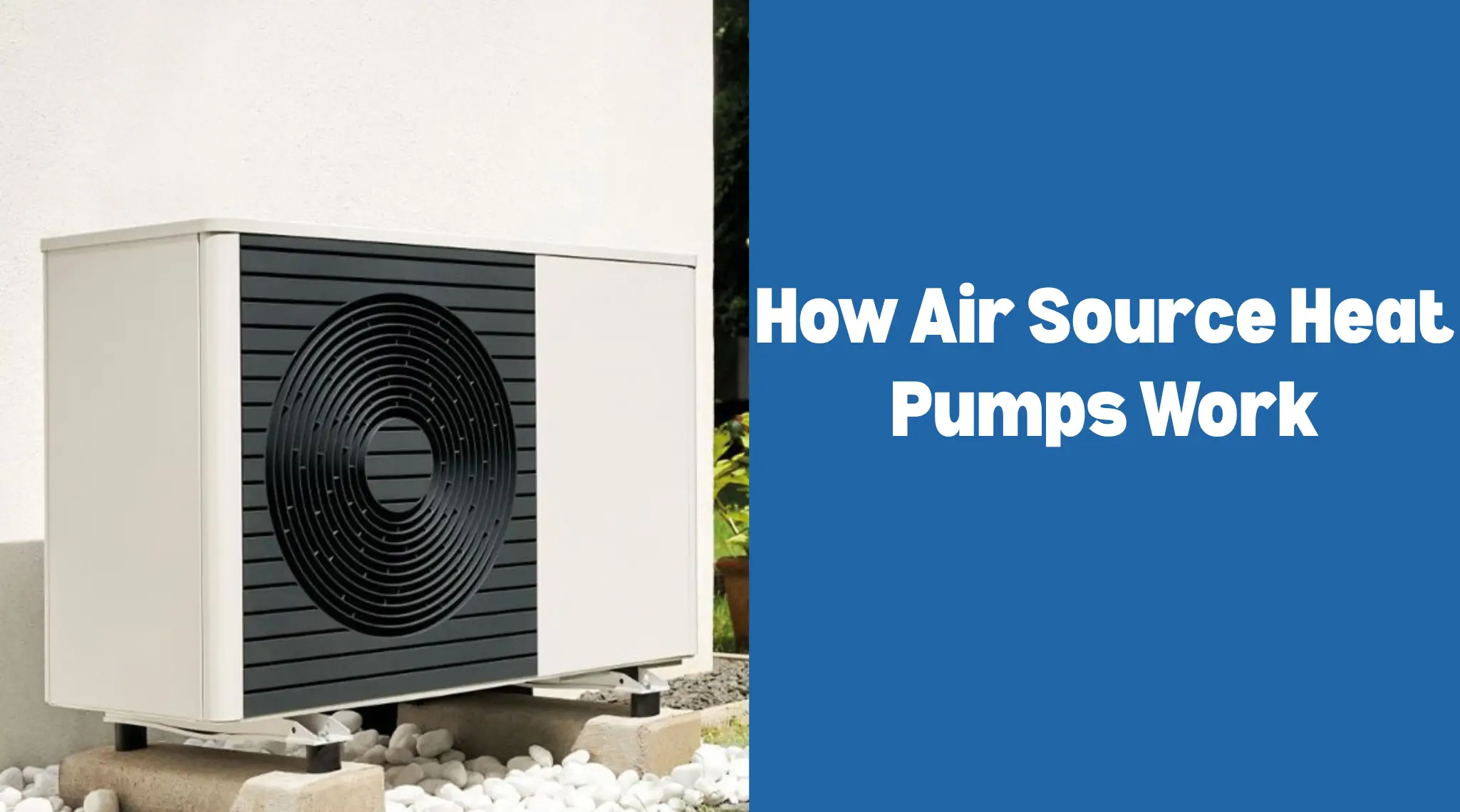
How Air Source Heat Pumps Work
Air source heat pumps offer a modern way to heat your home. They use energy from the air instead of burning fuel. This makes them more efficient and environmentally friendly than traditional boilers. Many homeowners now switch to heat pumps to reduce energy bills and carbon emissions.
Table of contents
What Is an Air Source Heat Pump
An air source heat pump collects heat from the outside air and transfers it into your home, and unlike gas boilers, it does not burn fuel but uses electricity to move heat from one place to another efficiently.
How Air Source Heat Pumps Work Step by Step
Time needed: 5 minutes
Air source heat pumps follow a continuous heating cycle. Each step plays a key role in producing heat for your home.
- Draw Air From Outside
The system pulls in air from outside your home using a fan unit. This works even in cold weather because the air still contains heat energy.
- Heat the Refrigerant Liquid
The outdoor air passes over a refrigerant liquid inside the system. This liquid absorbs heat from the air.
- Convert Liquid Into Gas
As the refrigerant heats up, it changes from liquid into gas. This process allows it to carry more heat.
- Compress the Gas
The system compresses the gas to increase its temperature. This step creates the high heat needed to warm your home.
- Transfer Heat Into Your Home
The hot gas moves through a heat exchanger. It transfers heat into your radiators or underfloor heating system.
- Cool the Gas Back Into Liquid
After releasing heat, the gas cools down and turns back into liquid. This prepares it for the next cycle.
- Repeat the Cycle
The system repeats this process continuously. This keeps your home at a steady and comfortable temperature.
Why Heat Pumps Are So Efficient
Air heat pumps produce more energy than they use and can achieve over 350 percent efficiency, which means for every unit of electricity consumed, they generate more than three units of heat, while a modern gas boiler reaches around 90 percent efficiency, making heat pumps a more efficient and cost-effective long term solution.
Benefits of Air Source Heat Pumps
Air source heat pumps offer several advantages:
- Lower energy bills over time
- High energy efficiency
- Reduced carbon emissions
- Consistent indoor temperature
- Long system lifespan
Installation Requirements
Air heat pumps need an outdoor unit and an indoor system. Installation is quicker than ground source systems. Homes with good insulation perform best. Double glazing and proper insulation help retain heat. If your home loses heat easily, you may need upgrades before installation.
Is a Heat Pump Right for Your Home
Heat pumps work best in modern, well insulated homes. They suit homeowners who want lower energy costs and eco friendly heating. If you plan long term savings and efficiency, a heat pump is a strong choice.
Conclusion
Air source heat pumps use natural energy to heat your home efficiently. They offer better performance and lower environmental impact than gas boilers. With proper installation and insulation, you can enjoy reliable heating and reduced energy bills.
Frequently Asked Questions
Leaving your air heat pump on constantly to regulate the temperature in your home is the most energy-efficient and cost-effective way to run it, and will help you stay comfortable year-round.
Yes, air heat pumps work even in cold weather. They can still extract heat from the air and provide consistent heating.
Air source heat pumps can reach over 350 percent efficiency. They produce more heat energy than the electricity they use.
Heat pumps work best in well insulated homes. Older homes may need insulation upgrades for better performance.
Heat pumps capture heat from air, ground or water which is then passed through a heat exchanger. This is then absorbed by the refrigerant gas, raising the temperature, after which it is moved to a compressor, where pressure is applied to create a higher temperature.